Why It’s Nice: Bok choy accommodates average ranges of nitrates and can be wealthy in vitamin C, which can assist stabilize and protect nitric oxide.
Find out how to Use: Use in stir-fries, soups, or uncooked in salads.
Radishes
Why It’s Nice: Radishes are an excellent supply of nitrates and likewise present a peppery taste to dishes, making them perfect in salads or as a garnish.
Find out how to Use: Slice uncooked into salads or add to sandwiches.
Kale
Why It’s Nice: Whereas not as nitrate-rich as spinach or arugula, kale nonetheless accommodates good quantities of nitrates and is filled with different well being advantages like antioxidants.
Find out how to Use: Use uncooked in salads, steamed, or blended into smoothies.
Cilantro
Why It’s Nice: Cilantro (or coriander leaves) is one other very high-nitrate leafy inexperienced that may improve NO ranges and add taste to dishes. Cilantro can be nice for detoxifying heavy metals, so it’s a win-win for you.
Find out how to Use: Sprinkle recent cilantro on salads, salsas, or add to juices.
Bonus Tip:
To maximise nitric oxide manufacturing, attempt combining a number of of those greens in a single meal, corresponding to a salad or a inexperienced juice, to create a synergistic impact. Consuming them uncooked or minimally cooked is right, as excessive warmth can cut back nitrate ranges.
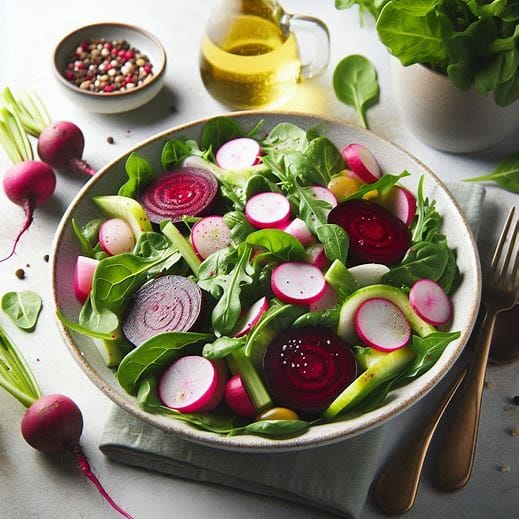
When you’re aiming for the very best NO increase, a salad with arugula, spinach, and beets, topped with some radish and celery, will ship a potent dose of dietary nitrates!
Nitric oxide (NO) is a robust molecule in your physique that helps your blood vessels calm down, bettering blood circulate and coronary heart well being. The most effective half? You may increase your nitric oxide ranges simply by consuming the best veggies! Some greens are filled with nitrates, which your physique turns into nitric oxide, providing you with advantages like decrease blood stress and even higher train efficiency. You want about 300 mg of nitrates a day to get the total advantages seen in analysis research. On this article, we’ll take a look at the highest 10 greatest greens that naturally enhance nitric oxide, and present you learn how to add them to your food plan for the very best outcomes!
Arugula (Rocket Lettuce)
Why It’s Nice: Arugula is the very best recognized nitrate-containing vegetable, with concentrations reaching as much as 7,000 mg/kg. Typical ranges are about 450 mg/100g. Only a small handful can considerably increase nitric oxide manufacturing.
Find out how to Use: Add it to salads, sandwiches, or mix it into inexperienced smoothies.
Spinach
Why It’s Nice: Spinach is filled with nitrates and offers a considerable increase to NO ranges. 100g (3.5 ounces) of uncooked spinach has round 70-200 mg of nitrates. Precise quantities rely on rising situations and seasonal differences.
Find out how to Use: Eat it uncooked in salads, mix into smoothies, add it to your recent vegetable juice or calmly steam it.
Beets (Beetroot)
Why It’s Nice: Beets are well-known for his or her excessive nitrate ranges and are sometimes used to spice up train efficiency and decrease blood stress. One cup of uncooked beets accommodates as a lot as 400-500 mg of nitrates. A cup of beet root juice has about 200 mg of nitrates.
Find out how to Use: Take pleasure in uncooked, roasted, juiced, or blended into smoothies.
Swiss Chard
Why It’s Nice: Swiss chard is intently associated to beets and is equally excessive in nitrates, making it a superb selection for supporting NO manufacturing.
Find out how to Use: Use in salads, sautéed dishes, or inexperienced juices.
Celery
Why It’s Nice: Celery, particularly the stalks and leaves, is a wealthy supply of dietary nitrates. It’s additionally hydrating and low in energy, making it an excellent addition to juices and smoothies.
Find out how to Use: Add to salads, soups, or fresh-pressed juices.
Lettuce (Romaine, Butterhead)
Why It’s Nice: The entire lettuce species are excessive in nitrates. Even iceberg lettuce has a good stage of nitrates. A spring combine is a good possibility for salads. Typical nitrate ranges for lettuce are round 150-200 mg for 3.5 oz (100 g) serving.
Find out how to Use: Use as a salad base or in wraps and sandwiches.
Bok Choy (Chinese language Cabbage)
Why It’s Nice: Bok choy accommodates average ranges of nitrates and can be wealthy in vitamin C, which can assist stabilize and protect nitric oxide.
Find out how to Use: Use in stir-fries, soups, or uncooked in salads.
Radishes
Why It’s Nice: Radishes are an excellent supply of nitrates and likewise present a peppery taste to dishes, making them perfect in salads or as a garnish.
Find out how to Use: Slice uncooked into salads or add to sandwiches.
Kale
Why It’s Nice: Whereas not as nitrate-rich as spinach or arugula, kale nonetheless accommodates good quantities of nitrates and is filled with different well being advantages like antioxidants.
Find out how to Use: Use uncooked in salads, steamed, or blended into smoothies.
Cilantro
Why It’s Nice: Cilantro (or coriander leaves) is one other very high-nitrate leafy inexperienced that may improve NO ranges and add taste to dishes. Cilantro can be nice for detoxifying heavy metals, so it’s a win-win for you.
Find out how to Use: Sprinkle recent cilantro on salads, salsas, or add to juices.
Bonus Tip:
To maximise nitric oxide manufacturing, attempt combining a number of of those greens in a single meal, corresponding to a salad or a inexperienced juice, to create a synergistic impact. Consuming them uncooked or minimally cooked is right, as excessive warmth can cut back nitrate ranges.
When you’re aiming for the very best NO increase, a salad with arugula, spinach, and beets, topped with some radish and celery, will ship a potent dose of dietary nitrates!